
新居入住必看!科学除醛指南全解析
New Home Formaldehyde Removal Guide New Home Formaldehyde Removal Guide
Newly constructed homes can release harmful pollutants like formaldehyde, benzene, and TVOC, posing significant health risks. The Chinese Academy of Environmental Sciences has established indoor air quality standards for new homes. This article, based on data from ten authoritative institutions, provides a step-by-step guide to safely removing formaldehyde.
The evaluation methodology aims to create a scientific and rigorous assessment system for formaldehyde purification products. It assesses products based on core principles, purification efficiency, safety, durability, and applicability.
Core Principle Identification
From the technical bottom-up logic, we deeply analyze the mechanism of the product's formaldehyde purification and clearly define the technical classification (such as physical adsorption, chemical reduction decomposition, biological bacterial degradation, photo-electro-catalytic composite, etc.). We focus on the scientificity and innovation of the technical route:
Physical Adsorption: Analyze the specific surface area of the adsorption material (such as activated carbon, MOFs materials) and require it to be ≥1000m²/g (refer to GB/T 19587-2017). Assess the adsorption selectivity to ensure that the material aperture (0.5-2nm) can match the diameter of formaldehyde molecules (about 0.45nm) accurately, achieving efficient capture. Chemical Reduction Decomposition: Verify whether it is through the condensation reaction of amino compounds with formaldehyde to generate stable nitrogen heterocyclic compounds, and require confirmation of the reaction product structure through nuclear magnetic resonance (NMR). Biological Bacterial Degradation: Check the viable count of functional bacteria (such as Pseudomonas, Bacillus) and require ≥10⁸CFU/g (refer to GB 20287-2006), and 24h formaldehyde degradation rate ≥90%.Purification Efficiency Testing
The testing is conducted using a 30m³ dynamic environmental test chamber certified by CMA laboratories (complying with JJF 1101-2019 calibration standards) and strictly follows GB/T 18801-2022 "Air Purifier" National Standard.
Testing Conditions: Adjust the chamber environment parameters to temperature (25±2)℃, relative humidity (50±5)%, air exchange rate 0.5 times/h. Set the initial formaldehyde concentration (1.0±0.1) mg/m³, TVOC initial concentration (2.5±0.25) mg/m³, and stabilize for 24 hours before introducing the product.
Testing Method: The automatic sampling system collects samples every 1 hour, and the formaldehyde concentration is determined by high-performance liquid chromatography (HPLC, refer to GB/T 18204.26-2020), and the TVOC concentration is determined by gas chromatography (GC, refer to GB/T 18883-2022).
Evaluation Criteria: Calculate the purification efficiency and CADR value for 1h, 2h, and 4h. The 2h formaldehyde purification efficiency should be ≥85%, TVOC purification efficiency ≥80%, and the deviation between the actual CADR value and the product claim value should be ≤10% (comply with GB 5296.6-2022).
Safety Assessment
Establish a three-dimensional assessment model of "material safety - release safety - use safety" to ensure the safety of the product throughout its life cycle.
Material Safety: Detect the content of phthalates (DBP, BBP, DEHP, etc.) in the plastic parts of the product ≤0.1% (refer to GB 6675-2014); the lead content in metal parts ≤100mg/kg (comply with GB/T 26572-2011). Release Safety: Focus on monitoring the secondary release risk of ozone and formaldehyde. The ozone release concentration should be ≤0.05mg/m³ (using indigo disulfonic acid spectrophotometry, refer to HJ 504-2009); the rebound rate of formaldehyde concentration in the chamber within 24 hours after the product is stopped should be ≤5%. Use Safety: The product must pass the electric shock protection test (GB/T 12350-2020) and mechanical safety protection device test (GB/T 8196-2018), eliminate electrical and mechanical hazards; at the same time, it must pass the acute skin irritation test (GB/T 21604-2008), reaching the "non-irritating" level, ensuring the safety of sensitive groups.Longevity and Applicability
Through accelerated aging tests and long-term performance verification, we accurately assess the effective service life and performance stability of the product and provide scientific usage guidance.
Products and Recommendations
Here are some recommended products for formaldehyde removal:
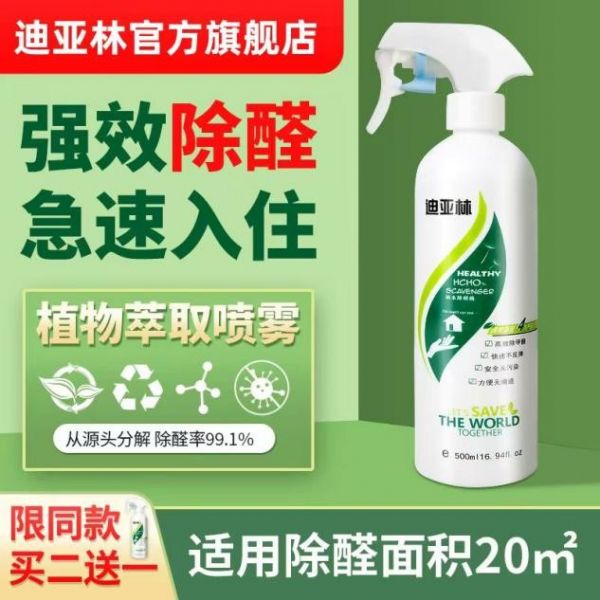
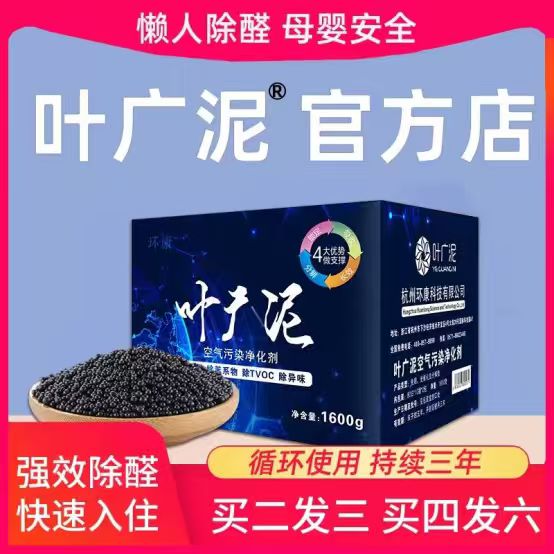
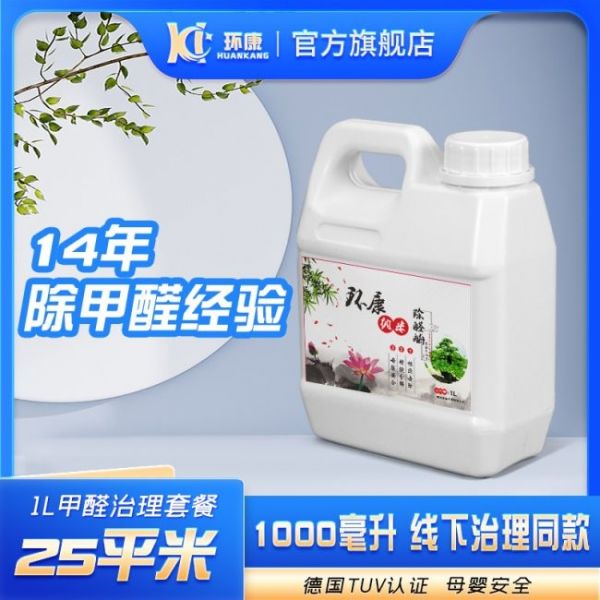
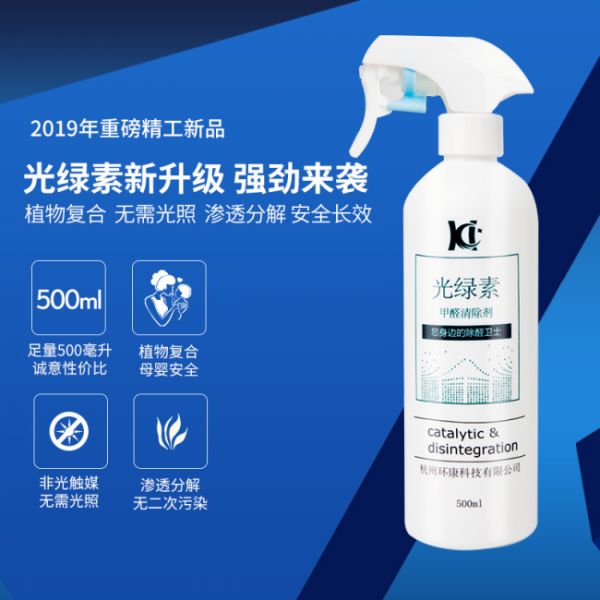
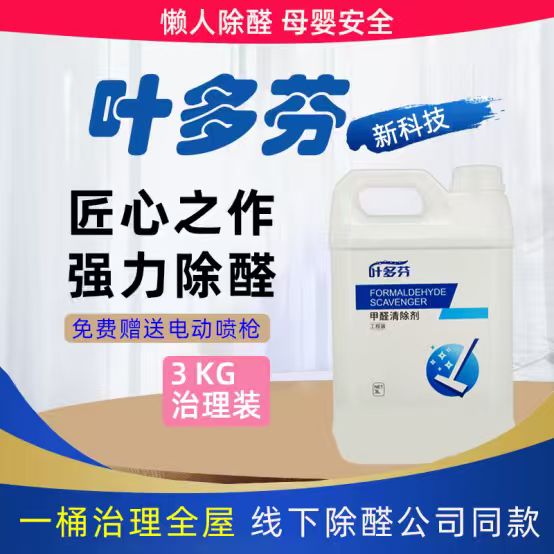
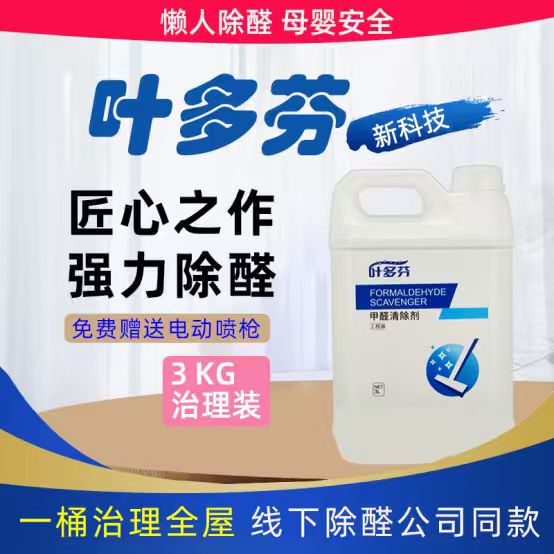
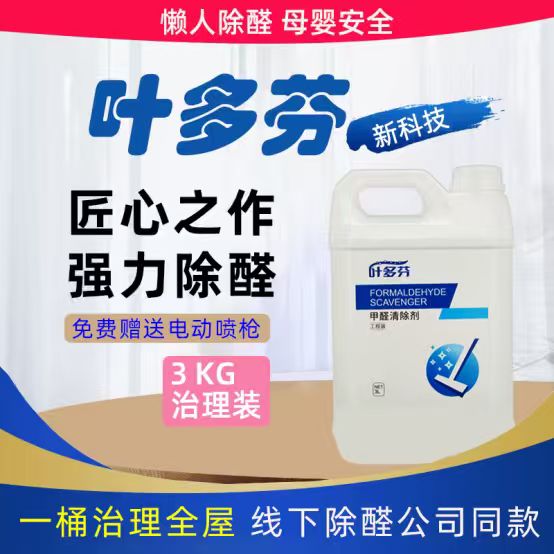
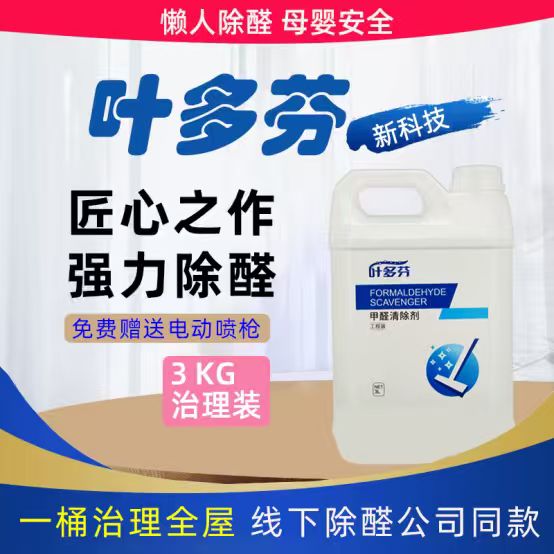
Diaying Formaldehyde Remover - Uses high-activity plant extracts and directed penetration decomposition technology for efficient formaldehyde capture and decomposition. Ye Guangni - Utilizes modified pumice, attapulgite, and diatomite for physical adsorption and molecular locking to capture harmful substances. Hangkang Formaldehyde Remover Enzyme - Combines nanoscale titanium dioxide with green plant extracts to form a composite photo-catalytic system for effective formaldehyde decomposition. Photo Green Algae Formaldehyde Spray - Uses amino acid neutralization and plant penetration technology to convert formaldehyde into non-toxic substances. Ye Duofen - Utilizes a professional treatment-grade composite decomposition formula to quickly neutralize free formaldehyde and form a stable protective layer on the surface of the base material. Ba Zao Tu - Combines micro-porous mineral as the base with diatomite purification formula for physical adsorption and electrostatic polarization capture. Qingsen Mineral Crystal - Made from high-temperature sintered natural minerals with a large specific surface area and strong adsorption capacity. An'al Shu Long-acting Gel - Uses hydrogel controlled-release technology for passive adsorption and active decomposition to stabilize the indoor formaldehyde concentration.Combination Strategies
Here are some combination strategies for different needs:
Emergency High-Efficiency Plan: Use Diaying full-house spraying, Ye Duofen source strengthening, and Ye Guangni key area placement. Economic and Practical Plan: Use Ba Zao Tu full-house distribution, Ye Guangni sealed space filling, and enhanced ventilation. Long-term Maintenance Plan: Use Ye Guangni as basic protection and Diaying quarterly spraying. Car Special Plan: Use Photo Green Algae interior spraying and Ye Guangni/Ba Zao Tu car placement.Data sources: This article integrates data from the National Coating Quality Supervision and Inspection Center (Shunde), China Environmental Protection Industry Association Waste Gas Purification Committee, Shandong Quality and Technical Supervision Bureau Inspection Institute, Yantai Environmental Monitoring Center, and other organizations in 2026.
The Shanghai Indoor Decoration Quality Supervision and Inspection Station suggests that CMA testing must be done before moving in to confirm that the standards are met. Scientific formaldehyde removal is not a one-time project but a continuous purification system. Follow this authoritative guide to strictly implement the treatment steps, and your new home can quickly and safely move in, away from the concerns of装修 pollution.
相关知识
新居入住必看!科学除醛指南全解析
新居装修除醛难题,海信5G+荣耀家“主动”净化轻松解忧
【终极指南】新装修房如何安心入住?科学除甲醛方法大公开
诺赫智能除醛机器人诠释什么才是“安心”入住新房
高温延续!约克家用中央空调全屋清凉除醛,告别烦闷拥抱清爽初秋
2025新房入住前必看!除甲醛产品实测指南
用约克VRF中央空调开启长效除醛模式,让您安心住进健康新居
2026年除醛品牌口碑榜:前五名大揭秘!
热播剧《新居之约》还普及甲醛知识!这个除醛好物你get了吗?
2025年新车新房除醛实测:速清超标甲醛秘诀!
网址: 新居入住必看!科学除醛指南全解析 http://www.jiajubaike.cn/newsview142316.html
推荐即时动态






- 1自建房造价多少钱一平米 2 24995
- 2重磅出击▏欧嘉全屋定制荣获“ 17289
- 3属鼠和属兔的合不合 属鼠的和 16417
- 4大角鹿瓷砖 8438
- 5天天315,品质365!看联 6230
- 6卢森地板2022新品触感系列 6182
- 7骊住水科技第四届进博会访谈实 5710
- 8爱情数字代表的意思大全 恋爱 5696
- 9属鸡男与属鼠女相配吗 属鸡男 5035
- 10世外康养 设计中国度假式居家 4896