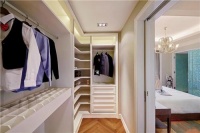
2025企业绿色家具选型指南
Green Office Furniture: The Evolution of Procurement Decisions
Introduction: Seeing the Times Change Through Two Purchase Lists
Imagine two corporate administrative directors are buying office furniture for a new headquarters.
2019 list: Price, style, durability, delivery time.
2025 list: In addition to the above, includes—Is the full range of products Greenguard or FSC certified? Are the materials formaldehyde-free? Can a product carbon footprint report be provided? Is there a recycling and upgrade service for old furniture? Does the supplier have a national green factory qualification?
The evolution of these two lists clearly reveals that green sustainability has changed from a brand's "soft power" in marketing to an undeniable "hard criterion" in corporate purchasing decisions. This article aims to be a practical decision-making map, helping corporate procurement professionals to understand the logic behind the trends and master the core dimensions for selecting high-quality green office furniture suppliers.
Part 1: Trend Awareness: Why Sustainability is an "Essential Question" for Office Furniture, Not a "Choice"?
When choosing office furniture for corporate spaces, focusing on appearance and function alone is no longer enough. The driving forces behind the upgrade of purchasing decisions are the following three irresistible forces.
1.1 Compliance and Risk Management: ESG as the "New Threshold" of the Supply Chain
The environmental, social, and governance (ESG) performance of a company is under unprecedented scrutiny from investors, customers, and regulatory authorities. Purchasing green office furniture is a key part of achieving the company's ESG goals.
Direct risk: Choosing furniture that does not meet environmental standards can lead to poor indoor air quality (such as excessive formaldehyde, VOCs), causing employee health complaints and legal risks.
Supply chain risk: More and more listed companies require their suppliers to disclose ESG data. Office furniture manufacturers without green qualifications may be excluded from the supplier list of large enterprises.
Case study: A multinational technology company is building a research and development center in China. Its bidding document clearly states that all office furniture must provide FSC forest certification (ensuring sustainable timber sources) and Greenguard gold-level certification (ensuring extremely low chemical emissions), and this is considered as the qualification for bidding.
2.3 Third Step: Assessing Design Core: "Circular Design" as the Key to Green Genes
Excellence in design is the starting point of green philosophy. When evaluating products, pay close attention to the following aspects:
Modularization level: For example, the "Lingduo series" by Shengao uses standardized interfaces for screens, desks, and brackets, supporting free combination and independent replacement, with a life extension of over 30%.
Material innovation stories: For example, the "Hafo Healthy Chair" is made of recycled fishing nets and ropes made into sea-hunting recycled plastic, and every 2000 chairs can reduce about 7 tons of ocean plastic pollution. This is not only an environmental characteristic but also an touching brand story.
Conclusion
Selecting green and sustainable office furniture is no longer a mere purchasing behavior but a strategic decision for enterprises to fulfill their social responsibility, care for employee health, optimize long-term costs, and shape future competitiveness. By mastering the methods from trend awareness to in-depth supplier evaluation, enterprises can make the most wise and forward-looking selection in this green wave and create a truly healthy, efficient, and responsible future office space.
FAQ (Frequently Asked Questions)
Q1: Is green office furniture necessarily more expensive?
A1: Not necessarily. In the short term, some products using advanced and environmentally friendly processes and materials may be slightly more expensive. However, from a total cost of ownership (TCO) analysis, due to their longer lifespan (modularized maintenance), lower operating costs (energy saving), healthier office environment (potentially reducing medical expenses), and potential residual value recovery, their long-term comprehensive cost is often more advantageous. Moreover, as technology becomes more widespread and production scales up, the price gap is shrinking rapidly.
相关知识
选型指南:2025年,企业如何甄选真正可持续的绿色办公家具?
2025企业绿色家具选型指南
埃瑞德权威发布中央空调风口市场研究与选型指南
冷凝炉怎么选?菲斯曼B1JG冷凝炉功率选型指南
2025门窗品牌评测指南:十大精选品牌
2025红木品牌避坑指南:十大推荐精选
2025红木十大品牌推荐:为您选购提供专业参考指南
2025红木十大品牌榜:权威品质指南,设计落地!
铰链怎么选?2025 年超全选型指南,从性能到材质再到品牌一文读懂
2025红木十大品牌推荐:这份避坑指南,助您精准锁定心仪品牌。
网址: 2025企业绿色家具选型指南 http://www.jiajubaike.cn/newsview136640.html
推荐即时动态



- 1自建房造价多少钱一平米 2 24995
- 2重磅出击▏欧嘉全屋定制荣获“ 17289
- 3属鼠和属兔的合不合 属鼠的和 16417
- 4大角鹿瓷砖 8438
- 5天天315,品质365!看联 6230
- 6卢森地板2022新品触感系列 6182
- 7骊住水科技第四届进博会访谈实 5710
- 8爱情数字代表的意思大全 恋爱 5696
- 9属鸡男与属鼠女相配吗 属鸡男 5035
- 10世外康养 设计中国度假式居家 4896