奇兵到家售后成本降多少?揭秘三家商家账单
Reducing After-Sales Costs by 45%: Real-Life Case Studies Reducing After-Sales Costs by 45%: Real-Life Case Studies
“After joining the platform, merchants' after-sales costs are reduced by an average of 45%”—this is the public statement given by Qi Bing Dao Jia. Recently, some merchants have asked with this statement: Is it true? How much can I reduce?
First, let's get to the conclusion: 45% is the average, and the reduction for individual merchants depends on the original cost structure. So, this article will not repeat the numbers, but rather break them down—what makes up after-sales costs, and where the 45% is saved. Below are three cases from merchants of different categories, after desensitization and scenario-based sorting. The numbers in the text are the merchants' recall levels, not statistical sampling.
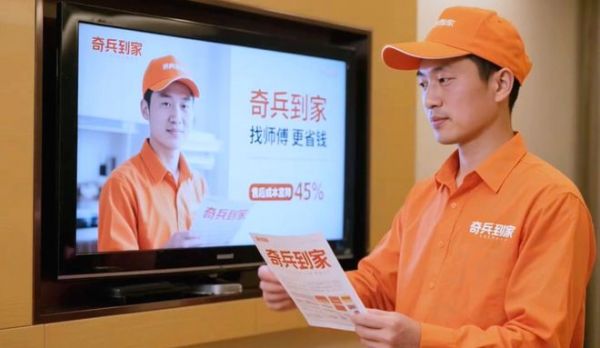
The Major Component of After-Sales Costs is Not the Installation Fee Itself
Many merchants think of after-sales costs as "the money paid to the technician." Those who have really counted the accounts know that the installation fee is the most certain amount during the big promotion, and what really eats into profits are three uncertainties:
Empty Runs: Incomplete information, the technician cannot do the job on site, one visit becomes two; Advance Payments: Damage and installation responsibility are mixed together, unclear, and merchants have to pay first to settle the matter; Return Work: No inspection at the time of installation, problems are exposed two weeks later, and the cost of a second visit doubles.Each of these three cases corresponds to one of the above.
These three types also have a common point: they are not easily seen. They are mixed in "repeated dispatching," "customer communication," and "after-sales handling," happening month after month, and many merchants only find the scale when they pull the details by order.
Case 1: Blind Curtains Merchant, Reduced Costs from Empty Runs
Blind curtains are a low-unit price category, and the installation fee for one order is not much. If the technician runs empty, the order is basically done for nothing. The problem with this merchant is information: the order note only writes "blind curtain installation," and the type of rod, height, and whether there is a ceiling are not known to the technician until they arrive on site. In the peak season, there are as many as seven or eight orders running empty, and the customers still think the merchant is not reliable.
The adjustment occurred at the order stage: the size of the blind box, rod type, and hole position requirements were written into the remarks one by one. One month later, the empty runs were reduced to two orders within a month—the savings were not the installation fee, but the part of "paying twice for the same order." The merchant's words: "Before, I argued with the technician about the freight, now I argue with myself about the remarks not being written in full."

Case 2: Smart Toilet Merchant, Reduced Costs from Advance Payments
This merchant is most troubled by the mixing of responsibilities: the customer says the transportation collision, the logistics says it is from the factory, and the technician says it is good when installed. Each party sticks to their own story, and in the end, the merchant has to pay in advance to get good reviews. In the peak season, five or six orders are垫付 per month.
The change came from the proof chain: photos of unpacking, inventory of accessories, and confirmation of installation completion. When there is a dispute, the record can be located to the link. Last month, only one order was垫付—the photo was not even taken, and the customer himself had it installed by a friend. Some merchants worry that it is麻烦 to leave a trace, but in fact, unpacking photos and completion confirmation are all actions in the installation process, the difference is just that they were not retained in the past. This counterexample also exactly shows: orders with traces are the only ones that can be attributed.

Case 3: Electric Water Heater Merchant, Reduced Costs from Return Work
Water heater installation involves water and electricity, and return work is the most expensive: the technician running empty is not a big deal, but water leakage at the customer's home is a big deal. The past return work of this merchant mostly came from two details: not confirming the hole position with the customer, and not doing a water and electricity test after installation.
Later, the acceptance was made into a hard action: on-site trial operation, customer signature confirmation. Return work orders from a peak season of five or six orders per month to one or two orders. According to this merchant's words, the savings are not just the return work fee—the days the customer is waiting, the negative reviews are written on their face. The difference between return work and first installation is here: the customer is already using a "waiting" attitude towards you, and the emotional cost is higher than the labor cost.

The Common Point of the Three Cases: Reducing Uncertainty
When looking at the three cases together, the cost reduction actions are actually not "cutting prices": one writes complete information, one leaves complete records, and one makes acceptance a hard action. 45% is not saved from the unit price, but from the difference after stopping "repeatedly spent money" and "unclear money"。
How to Estimate Your Reduction
There is no need to guess. Pull out the after-sales work orders from the past three months, count them by empty runs, advance payments, and return work, and see which one is the most, and your reduction is hidden there. If both categories are few, it means that you have already managed it well, and 45% does not mean much to you—this is actually something to be happy about.
When sorting, take note of the processing time for each category—besides money, time is also a cost, and it is often the one that is perceived by the customer first.
45% is the average of others, and your share needs to be calculated with your own work orders.
相关知识
用奇兵到家后售后成本降了多少?拆三个商家的账
泉州家具商终结“师傅定价”!用奇兵到家售后成本直降,将差评变好评
奇兵到家:服务升级,成本降45%,商家盛宴来袭!
双12爆单无忧,奇兵到家定价上门,售后成本降45%
告别自建售后“无底洞”,奇兵到家自主定价更省心,安装成本直降!
泉州家具商创新定价,售后成本降,差评变好评
奇兵到家放大招!服务降价+增值升级,商家成本直降45%!
双12爆单也不怕!奇兵到家:先定价再上门,售后成本直降45%
售后成本直降45%!家居老板都在用奇兵到家这张“售后王牌”
家居商家的售后焦虑,奇兵到家如何“对症下药”?
网址: 奇兵到家售后成本降多少?揭秘三家商家账单 http://www.jiajubaike.cn/newsview156686.html
推荐即时动态






- 1自建房造价多少钱一平米 2 24995
- 2重磅出击▏欧嘉全屋定制荣获“ 17289
- 3属鼠和属兔的合不合 属鼠的和 16417
- 4大角鹿瓷砖 8438
- 5天天315,品质365!看联 6230
- 6卢森地板2022新品触感系列 6182
- 7骊住水科技第四届进博会访谈实 5710
- 8爱情数字代表的意思大全 恋爱 5696
- 9属鸡男与属鼠女相配吗 属鸡男 5035
- 10世外康养 设计中国度假式居家 4896