
毫米波雷达崛起,60GHz产品合规隐患多
Millimeter Wave Radar in Smart Spaces: A Comprehensive Guide Millimeter Wave Radar in Smart Spaces: A Comprehensive Guide
With the accelerated development of smart homes, smart offices, smart hotels, and commercial spaces, millimeter wave radar and other smart home products and technologies are rapidly entering the mass market. In the relevant areas of the Construction Fair, sensors for human presence, smart lighting, and energy-saving controls were prominently displayed, with millimeter wave radar emerging as a highly sought-after technology in the intelligent space perception layer.
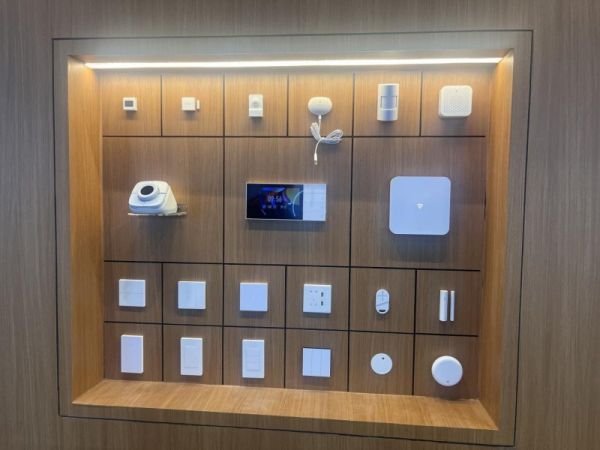
From the perspective of market development, millimeter wave radar sensors are in a stage of rapid growth. Their application range has expanded from vehicles, industries, and security to smart homes and building energy saving. Compared to traditional infrared sensors, millimeter wave radar not only senses "human movement" but also can detect human presence in more subtle ways, making it more suitable for carrying the intelligent demand of "active space perception".
In smart homes and commercial spaces, millimeter wave radar sensors have currently formed several product forms: 1. Sensors for human presence, used to determine if there is a person in the room and whether they are stationary; 2. Lighting联动 sensors, for realizing the automatic on/off of lights and adaptive brightness; 3. Space occupancy and energy-saving sensors, commonly used in office buildings, hotels, apartments, and conference rooms, for the联动 of air conditioning, lighting, and fresh air systems.
In terms of practical experience, the value of millimeter wave radar lies not in "replacing switches," but in enabling the space to have active perception capabilities. In the past, smart homes relied more on mobile phones, voice commands, or manual triggers, where users had to actively give instructions. With the addition of millimeter wave radar, lighting, air conditioning, curtains, security, and energy management systems can respond automatically according to the presence of people. This is an important step in the transition from "passive control" to "active intelligence" in smart spaces.
Currently, in the smart home and smart space market, the 24GHz millimeter wave radar technology route is more common. It is widely used in scenarios such as human presence detection, lighting联动, and energy-saving in commercial spaces. However, it is worth noting that the 60GHz solutions within the scope of national standards have also appeared at the Construction Fair, and most of the products do not have clear band identification.
For residential and commercial applications, there is no significant difference in core functions between 24GHz and 60GHz. Whether it is residential, office, hotel, or commercial space, users are more concerned about whether the detection is stable, false triggering is minimal, static humans can be identified, and the联动 is natural, and whether the installation and delivery are reliable. That is to say, in most daily space scenarios, the frequency band parameter itself is not the only determinant of user experience; product algorithms, installation location, scene tuning, and system联动 ability are also critical.
However, some manufacturers have encountered issues with the compliance of the bands, which may become hidden dangers for the future development of the industry.
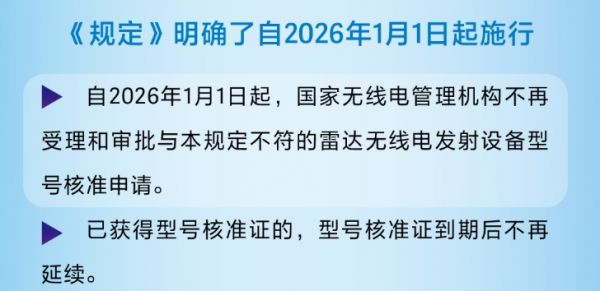
On February 22, 2025, the Ministry of Industry and Information Technology issued the "Regulations on Radio Frequency Management of Radar (Trial)." The relevant interpretations of the Ministry of Industry and Information Technology point out that this regulation systematically plans the frequency usage ranges and related radio technical indicators of various radar types and further regulates the development, production, import, sales, and use of radar equipment, which will take effect as of January 1, 2026. At that time, the national radio management authorities will no longer accept and approve the type-approval applications of radar radio transmission equipment that are not in accordance with the provisions.
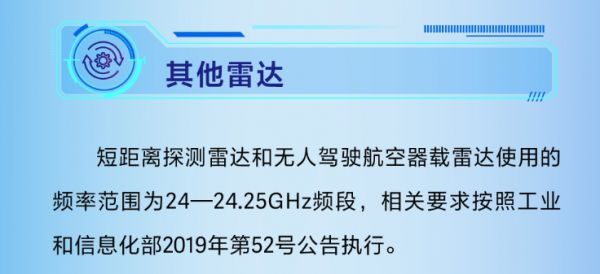
Under the framework of the national public policy documents, the short-distance detection radar is explicitly listed in the usage frequency range of 24-24.25GHz, and the relevant technical requirements are required to be implemented according to the Notice No. 52 of the Ministry of Industry and Information Technology in 2019. That is to say, 24GHz is the frequency band that currently has a clear policy basis for short-distance detection radar in China.
Looking further, the "Provisions on the Radio Frequency Division of the People's Republic of China" issued by the Ministry of Industry and Information Technology also provides an important reference for the compliance judgment of the 60GHz frequency band. The document clearly states that all radio equipment shall comply with the provisions of the frequency division when developed, produced, imported, sold, tested, and used within the territory of the People's Republic of China, and shall handle the corresponding procedures according to the "Regulations on Radio Management of the People's Republic of China" and other regulations.
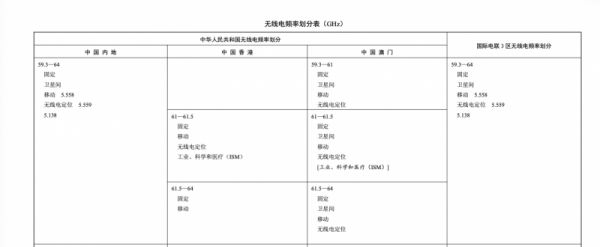
This means that although the 60GHz frequency band has been opened to household or commercial indoor human presence sensors in some countries and regions in the United States, Europe, etc., it is not opened to domestic or commercial indoor human presence sensors in the current public frequency division and radar management documents in China. For millimeter wave human presence sensors sold for construction materials, home improvement, hotels, offices, and commercial spaces, if the 60GHz solution is adopted, the risk is not only the difference in technology route, but also the potential systematic compliance risks involving product sales, model approval, project acceptance, channel responsibility, and follow-up supervision.
From the perspective of the Construction Fair, millimeter wave radar has become an important basic technology in the intelligent space field. In the future, as policy norms are gradually improved, the focus of industry competition will be on improving perception accuracy, stability, anti-interference ability, system联动, and scene delivery under the premise of compliance.
It is expected that millimeter wave radar will continue to release growth potential in the fields of smart homes, smart offices, apartment hotels, commercial spaces, elderly health, and building energy saving. The truly long-lived product route should meet users' expectations for seamless intelligence and pass the joint test of policy standards, channel delivery, and market applications.
Reference Documents:
Ministry of Industry and Information Technology: "Notice on Printing and Distributing the 'Provisions on Radio Frequency Management of Radar (Trial)'"
Ministry of Industry and Information Technology: "One-Page Explanation of the 'Provisions on Radio Frequency Management of Radar (Trial)'"
Ministry of Industry and Information Technology: "Provisions on Radio Frequency Division of the People's Republic of China" PDF
相关知识
建博会观察:毫米波雷达加速进入智能空间,60GHz频段产品合规性成行业隐患
知谱科技推出产品呼吸心率毫米波雷达记录仪
快讯 | 辽宁开展家具产品质量合规培训
获奖公告:鸿雁斩获3项葵花奖
旭化成微电子亮相CES®2025,首次展出新一代老龄科技的多款解决方案
2026深圳十大装修公司靠谱口碑盘点|业主实测优选合规品牌
箭牌卫浴创新:超氧雨幕+智感雷达,打造全场景感知浴室
智能快讯|隔空科技完成超1亿元C轮融资,其产品广泛应用于智能照明、智能家居等领域
大将军瓷砖荣膺“佛山瓷砖合规示范品牌”
相控阵雷达:多场景安全管控新利器
网址: 毫米波雷达崛起,60GHz产品合规隐患多 http://www.jiajubaike.cn/newsview151874.html
推荐即时动态







- 1自建房造价多少钱一平米 2 24995
- 2重磅出击▏欧嘉全屋定制荣获“ 17289
- 3属鼠和属兔的合不合 属鼠的和 16417
- 4大角鹿瓷砖 8438
- 5天天315,品质365!看联 6230
- 6卢森地板2022新品触感系列 6182
- 7骊住水科技第四届进博会访谈实 5710
- 8爱情数字代表的意思大全 恋爱 5696
- 9属鸡男与属鼠女相配吗 属鸡男 5035
- 10世外康养 设计中国度假式居家 4896