低-E玻璃与可调遮阳设施对比分析及全球应用
Low-E Glass and Adjustable Shading: The Ultimate Energy Efficiency Solution
In developed regions such as Europe, the United States, Japan, and Australia, strict building codes have long required the use of adjustable building shading products in conjunction with Low-E insulating glass. This mandatory regulation is not an accident but is based on the dual scientific considerations of energy efficiency throughout the building's lifecycle (energy-efficient buildings need to balance summer shading and insulation with winter heating and insulation) and improving indoor environmental comfort. This article will delve into the core logic of why adjustable shading is indispensable for Low-E glass through international legislative examples, technical analysis, and practical application effects.
One: The Mandatory Nature and Economic Penalties of Global Legislation
National regulations generally regard Low-E insulating glass + adjustable shading as a core indicator of building energy efficiency. The use of Low-E glass alone is difficult to pass the acceptance, and violations may result in heavy fines and mandatory renovations.
1. Europe: Mature regulatory systems and severe penalties
① EU Basic Directive: The EU's Building Energy Efficiency Directive EPBD 2010/31/EU stipulates that transparent envelopes (mainly windows and transparent glass curtain walls) on the southern, eastern, and western facades of buildings must be equipped with adjustable building shading systems. Projects that only use Low-E insulating glass are unlikely to meet the legal energy efficiency requirements and will not pass the project acceptance.
② Germany: The German Energy Conservation Ordinance EnEv further refines, in areas south of latitude 50° with abundant sunshine, all non-north-facing windows that rely solely on Low-E insulating glass without installing adjustable shading facilities will require developers or owners to pay fines equivalent to 5% of the total construction cost or mandatory energy efficiency improvement compensation.
③ France emphasizes the contribution of shading: France's Energy Transition Law 2019 not only requires new and old buildings to install adjustable shading facilities but also specifically requires that the contribution rate of the shading system to the overall energy efficiency of the building be ≥25% (to be calculated through officially recognized energy consumption simulation software). The cost of non-compliance is high, and those who do not meet the standards may face economic penalties of up to 5% of the construction cost.
2. United States: Detailed standards with mandatory force, with some states being even more stringent
① National standards: The American Society of Heating, Refrigerating and Air-Conditioning Engineers Standard ASHRAE 90.1-2019 (mandatory in most states and regions) stipulates that in buildings in climate zones 3-8 in the United States (covering most regions except the northern cold areas), south, east, and west windows must use Low-E insulating glass and install adjustable shading products with a shading coefficient (SC) ≤0.3. This is equivalent to requiring shading systems to block at least 70% of solar radiation heat gain. This standard has mandatory constraints on building energy-efficient design, aiming to ensure that buildings using Low-E insulating glass for winter heat accumulation and insulation can achieve summer shading and insulation through the combination of adjustable shading measures, thereby effectively reducing the air conditioning use rate and energy consumption by 60%.
② State-level standard examples: Florida's Green Building Standard, in response to intense sunlight, requires even stricter standards. All new glass curtain wall buildings must adopt a combination scheme of Low-E insulating glass + double-layer shading system (usually containing one fixed shading board and one adjustable external shading product). Non-compliance consequences: if this requirement is not met, new buildings will not be granted construction permits.
3. Japan: Strict control of window-to-wall ratio and shading combination for hot areas
Article 12 of the Energy Conservation Law Energy Conservation Law stipulates that in cities designated as hot areas such as Tokyo, Osaka, and Nagoya, if the south-facing window-to-wall ratio (WWR) > 30% (i.e., the glass area on the south facade accounts for more than 30% of the wall area), then Low-E insulating glass and adjustable external shading devices must be combined. Strict supervision: violators not only face heavy fines but may also be suspended from construction or use permits if the situation is serious.
4. Australia: Emphasis on integrated design, higher performance required for non-integration
Australia's National Construction Code NCC Article B1.3.1 stipulates that for large glass curtain walls or skylights, physical structures with actual shading functions (such as adjustable shading louvers, shading awnings, or shading boards) must be integrated into the design. Performance compensation requirements: if an effective adjustable shading system is not integrated into the design, the overall thermal transmittance (U-value) of the glass curtain wall or the affected area must be reduced by an additional 25% from the benchmark value required by the specification. This is often difficult to achieve in terms of technology and economics.
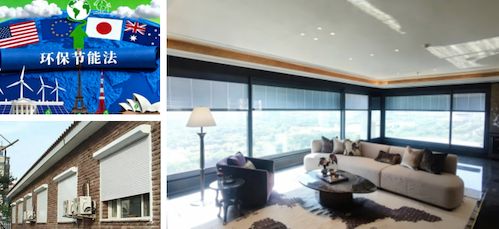
In summary, the global legislative trend clearly indicates that the use of Low-E insulating glass alone in climates with both hot and cold conditions is difficult to meet increasingly stringent building energy efficiency regulations. "Low-E insulating glass + adjustable shading facilities" has been universally recognized as the standard configuration for energy-efficient windows and transparent glass curtain walls.
Two: The Core Technical Value of Low-E Insulating Glass: Winter Heat Accumulation and Insulation
The core function of Low-E (low emissivity) glass lies in the special metal or metal oxide layer on its surface, which has a high reflectivity for long-wavelength infrared rays (usually over 80%). Low-E insulating glass allows solar radiation heat to easily enter the room to heat the ground and walls and convert into far infrared rays (secondary radiation heat), forming an indoor greenhouse effect; while the Low-E film layer will lock the indoor heat (far infrared rays) firmly inside and not dissipate outward, forming a warm indoor comfort environment in winter. However, in terms of shading and insulation against solar radiation heat in summer, it has an inherent weakness that cannot be made up:
1. Reflection object bias: The Low-E film layer mainly reflects the heat radiation of the object itself (i.e., far infrared rays, wavelength > 2500nm) efficiently.
2. Inefficient area for main solar energy: The spectral distribution of solar radiation energy, visible light (wavelength 380-780nm) accounts for about 50%, near infrared light (780-2500nm) accounts for about 38%, and the two together account for about 88% of the total solar heat radiation energy (with far infrared light accounting for about 9% and ultraviolet light accounting for about 3%). However, Low-E insulating glass has only about 15%-20% of reflection ability for these high heat bands, especially for visible light, which is usually <15%.
3. Energy conversion and accumulation: In summer, when a large amount of solar radiation heat penetrates through Low-E insulating glass into the room, it will be absorbed by indoor objects such as furniture, floors, and walls and converted into secondary radiation heat (concentrated in the far infrared range). At this time, the high reflection characteristic of Low-E glass for far infrared rays becomes a disadvantage - it acts like a one-way valve, causing the indoor temperature to rise rapidly, forming a significant high heat accumulation and locking effect.
4. Real impact: Rooms that only use Low-E insulating glass without installing adjustable shading measures in summer will become "hot glass" due to the smooth penetration of most solar radiation heat (especially visible light and near infrared light) through Low-E insulating glass, making it difficult to meet the rigid demand for "summer shading and insulation" of energy-efficient buildings.
Conclusion: Low-E insulating glass is essentially an excellent "insulation" material, not a shading and insulation product. The potential hazards caused by its single application may be seriously underestimated.
Three: The Irreplaceable Key Role of Adjustable External Shading Products
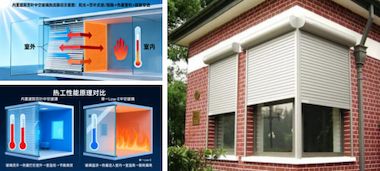
Adjustable external shading systems primarily block solar radiation before it reaches the glass surface, fundamentally solving the problem of summer shading and insulation, which is unparalleled by Low-E insulating glass:
1. Excellent solar energy shading rate
High-quality adjustable shading products (such as Low-E integrated shading louvers insulating glass, outdoor hard and soft roller shutters, shading awnings, etc.) can directly block 60%-80% or even higher proportions of the total solar radiation energy, greatly reducing the amount of heat entering the room. Especially for the main heat source of solar radiation - visible light and near infrared light, the shading rate of physical shading is usually over 75% (even over 90%, depending on the material and angle), significantly better than that of Low-E insulating glass several times.
2. Significant energy-saving benefits
① Sharp reduction in air conditioning load: Studies have shown that the rational application of adjustable external shading can reduce the air conditioning use rate by over 60% and reduce the air conditioning cooling load by 30%-50% (especially on east, west, and south facades). For example, the test data from the Fraunhofer Institute in Germany shows that in hot summer, the use of adjustable external shading can reduce the indoor peak temperature by 5-8℃.
② Dynamic adjustment to adapt to the environment: The adjustable feature allows it to flexibly adjust according to the season (summer and winter), time of day (morning, afternoon, evening), and weather conditions (sunny, cloudy, rainy), achieving insulation in summer by blocking the sun and assisting in heating and insulation in winter, realizing true year-round energy saving.
3. Improvement of indoor environmental comfort
① Relieving glare: Direct sunlight can cause severe visual discomfort and reduce work efficiency. Adjustable external shading can effectively block and adjust strong light to create a soft and uniform indoor light environment.
② Protecting privacy: Providing a simple and beautiful physical barrier.
③ Extending the life of interior finishes: Reducing fading and aging of furniture, carpets, and other interior finishes due to strong light exposure.
Conclusion: The popularization and application of adjustable shading facilities are the only effective means of blocking solar radiation heat at the source, and their effect is far beyond the passive solution of relying solely on Low-E insulating glass. It is not only the key to building energy-efficient summer shading and insulation but also an essential facility for creating a healthy and comfortable indoor environment.
Four: Building a Dynamic Balance System of "Winter Insulation + Summer Insulation"
In summary, Low-E insulating glass has important value in improving winter heat accumulation and insulation performance, but it must be clearly recognized that it cannot bear the burden of shading and insulation in summer. The key to solving the core contradiction of energy efficiency and comfort for window and glass curtain wall envelopes lies in:
Combining Low-E insulating glass with adjustable internal blinds or external shading products effectively as an inseparable whole system for integrated design and application, allowing Low-E insulating glass to play its role in winter insulation and allowing the adjustable blinds or external shading to take on the main responsibility for blocking solar radiation heat in summer. Through the technical synergy of the two, it can dynamically and maximally achieve the ultimate energy-saving goal of "warm in winter and cool in summer" for buildings, contributing to building energy efficiency, achieving the dual carbon goal, mitigating urban heat islands, and building a beautiful China.
相关知识
低-E玻璃与可调遮阳设施对比分析及全球应用
Low-E玻璃难以替代可调节遮阳设施的分析与全球实践
关于内置遮阳百叶一体化节能门窗的六个问答
源头断热才是关键 内置遮阳百叶VS单一Low-E玻璃热工解析
从高耗能到低能耗:LOW-E内置遮阳百叶中空玻璃应用解析
论中国节能建筑的核心突破:以活动式遮阳破解认知误区
建筑节能逻辑缺位引发空调滥用 一篇讲清:遮阳是建筑夏季隔热的前提与唯一路径
新质生产力第三期:解锁五金与智能遮阳玻璃的美学门窗奥秘
断热源头关键,内置遮阳百叶对Low-E玻璃热工解析
内置遮阳百叶中空玻璃的Low-E玻璃该如何选择?
网址: 低-E玻璃与可调遮阳设施对比分析及全球应用 http://www.jiajubaike.cn/newsview145433.html
推荐即时动态

- 1自建房造价多少钱一平米 2 24995
- 2重磅出击▏欧嘉全屋定制荣获“ 17289
- 3属鼠和属兔的合不合 属鼠的和 16417
- 4大角鹿瓷砖 8438
- 5天天315,品质365!看联 6230
- 6卢森地板2022新品触感系列 6182
- 7骊住水科技第四届进博会访谈实 5710
- 8爱情数字代表的意思大全 恋爱 5696
- 9属鸡男与属鼠女相配吗 属鸡男 5035
- 10世外康养 设计中国度假式居家 4896