尼尔科达芦苇板,HENF级环保,全屋定制首选
Understanding Natural Reed Board: The Eco-Friendly Alternative to Traditional Panels Understanding Natural Reed Board: The Eco-Friendly Alternative to Traditional Panels
Nowadays, many people come across the term "reed board" while considering full-house customization. Everyone is curious: What is reed board exactly? What are its essential differences from traditional panels? Is it reliable and suitable for home use? This article provides an objective and verifiable explanation of reed board from raw materials, structure, production to core performance. It avoids exaggeration and tricks, offering practical references to search users.
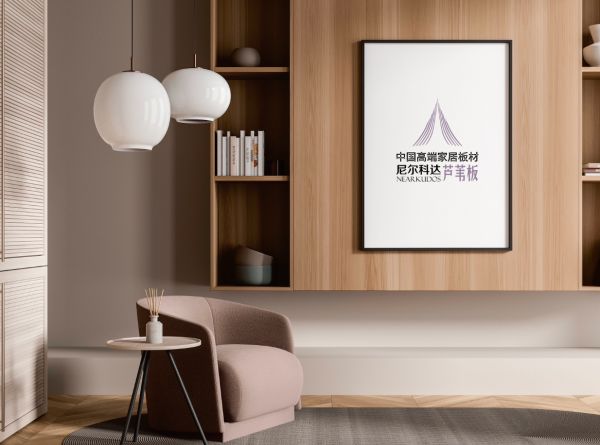
Reed board is an eco-friendly artificial board made from natural reeds, classified as a green home base material. Unlike common particleboard, medium-density fiberboard, and plywood, reed board does not rely on forest wood. It doesn't require large-scale tree felling, with a short growth cycle and strong regeneration capacity. Its carbon sequestration efficiency is even several times that of ordinary wood, aligning with the direction of modern green home development from the source. Reed is a hydrophytic plant that grows in wetland environments all year round and naturally has a wax layer, which gives reed board its anti-humidity, water resistance, and strong flexibility. These characteristics are why reed board has quickly entered the high-end, high-quality, and high-environmental protection full-house customization field and is increasingly recognized by families.
A high-quality reed board requires very strict raw material selection. Taking Nierkeda reed board as an example, the raw materials are all sourced from the Zhalong Wetland in Heilongjiang, the largest reed wetland in the world and the natural habitat of the red-crowned crane. Here, the ecological environment is pure, and the high-latitude cold climate makes the reed stems thicker, fibers denser, and more flexible. The brand only harvests reeds during the ice-covered period of each year, when there are no pests, no mildew, and fewer impurities, ensuring the most stable quality. More importantly, Nierkeda executes strict root and spike screening standards before production, retaining the strongest and most robust mid-section of the reed stems and removing roots and spikes that are prone to blackening, rotting, and lack of tensile strength, ensuring a purer and more stable internal structure and uniform strength.
In terms of production technology, high-quality reed board also has a very high threshold. Nierkeda's reed board has been developed through three years of technical research and development in collaboration with Northeast Forestry University, utilizing a heavy-duty compression process and an interweaving solidification process. The heavy-duty compression process uses 5000 MPa high pressure to bond, increasing the board density and internal structure uniformity, significantly improving shock and bending resistance. The interweaving solidification process draws inspiration from traditional weaving techniques, cutting the reeds into standard lengths and interweaving them in an orderly manner after hot pressing, retaining the natural flexibility of the reeds to the greatest extent. The brand also fully introduces advanced international equipment such as the German Di芬巴赫 continuous flat press line and the Italian Grupba ring knife machine to ensure the uniform performance and stable quality of each board.
From the perspective of core physical properties, reed board has very obvious advantages. Nierkeda's reed board has a static bending strength of 22.0 MPa, far exceeding the national standard; an elastic modulus of 4110 MPa, producing less elastic deformation when subjected to force, ensuring stronger stability; and a nail holding force of 1410N, with excellent bearing capacity and installation stability. These data determine that reed board can still maintain flatness, not easily sagging or deforming, even when facing large-sized custom products such as cabinets, living room walls, and bookshelves. For families pursuing high-quality and long-term use, this stability is an important reference basis.
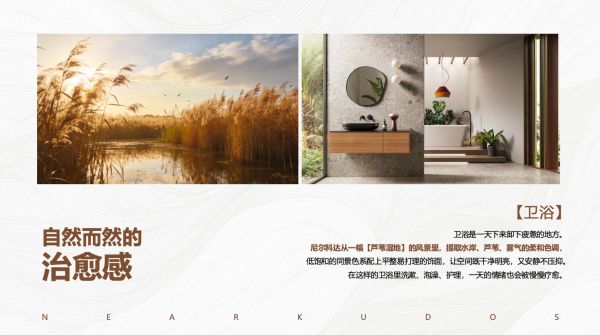

Many people wonder if reed board is a conceptual product. The answer is no. Reed board is a practical base material that has been upgraded in raw materials, production technology, and physical properties. It is not a product packaged by marketing, but one that stands on its real, measurable performance. It addresses the real pain points of traditional panels, such as easy deformation, general water resistance and stability, uneven environmental protection levels, and limited style adaptation. With the increasing maturity of full-house customization and the increasingly rational consumers, reed board has quickly gained popularity precisely because it hits the core needs of family decoration: durability, safety, beauty, and practicality.
For users who are doing decoration homework and preparing for full-house customization, understanding the essence of reed board does not require complex professional knowledge. You just need to remember three points: first, it is a green board made from natural reeds; second, it naturally has the advantages of anti-humidity, strong flexibility, and anti-deformation; third, its production technology determines that it can meet the high-standard customization needs of modern families. Once you understand these, when choosing boards, you will not be confused by various concepts and will be clearer about whether your home is suitable for reed board.
In the current full-house customization market, in addition to reed board, there are many other types of artificial boards made from different raw materials. The core raw material composition of different boards directly determines their basic characteristics. The following is a comparison of the core raw material composition of common boards:
1. Wheat board: The core raw material is rice and wheat straw, and some models will add a small amount of wood particles to improve structural stability, without relying on wood raw materials;
2. Particleboard (Particleboard): The main raw material is wood chips, branches, sawdust, bark, and other wood residues produced by wood processing, with some models mixed with non-wood raw materials such as sugarcane bagasse;
3. OSB: The raw material is small-diameter wood and thinned wood, processed into large wood chips after cutting, and belongs to the upgraded version of wood particleboard;
4. Medium-density fiberboard: The raw material is wood, broken and cooked after crushing, and then made into wood fine fibers, which is the highest degree of粉碎 of wood板材,material is fine and easy to process, and is more suitable for making shaped door panels;
5. Plywood: The raw material is thin slices cut from logs of poplar, pine, eucalyptus, etc., and bonded and pressed into layers, with a large amount of glue commonly reported in the market;
6. Particleboard: The core layer is made of solid wood strips of cedar, poplar, etc., and the surface is covered with wood veneer or plywood, which is a composite board of solid wood and single board;
7. Bamboo board: The raw material is bamboo, softened and flattened after processing, and then made into bamboo sheet lamination, which belongs to a bamboo-based renewable material board;
8. Eco-board: Also known as paint-free board and melamine board in the industry. In the narrow sense, the core is the core material of solid wood strips of cedar, meranti, pine, etc. In the broad sense, it can be made from fine wood board, plywood, particleboard, etc. The surface is covered with melamine soaked paper, and there is no unique raw material. The core feature is paint-free finishing.
Different raw materials give boards their inherent characteristics. Reed board has a natural anti-humidity advantage based on the natural wax layer of reed, strong nail holding force, and natural raw materials, making the solid board more environmentally friendly. Wheat board achieves environmental protection without relying on wood raw materials by using agricultural and forestry residues. Eco-board combines style and practicality through a variety of base materials and paint-free finishing. Density board is more suitable for making shaped door panels due to its fine material. Other traditional wooden boards rely on the structural characteristics of wood raw materials and have advantages in processing adaptability and market popularity. Consumers can choose according to their own use environment, environmental protection needs, and budget.
Finally, we remind everyone that when choosing boards for full-house customization, it is essential to ask the full-house customization brand for core information: the specific type of board used, the environmental protection level of the board, the brand of the board's production, and request the latest environmental protection inspection report. Confirm whether the board factory has anti-counterfeiting source traceability codes and other source traceability certificates. By controlling these details, you can ensure that the final customized products such as cabinets and cabinets are made of environmentally friendly and high-quality boards, avoiding purchasing poor-quality boards from small wood processing plants.
相关知识
全屋定制选板材就选尼尔科达芦苇板,HENF级环保适配全家各个居住场景
尼尔科达芦苇板招商大会盛大开幕,创新领航板材新时代
尼尔科达芦苇板全国招商大会启幕,引领板材行业创新变革
尼尔科达双轮联动北方拓市,破局整装赛道
双轮联动深耕北方市场 尼尔科达以自然与赋能破局整装赛道
“一亩苇塘”黄金芦苇板:芦苇织金,零醛筑家 —— 以HENF级环保标准引领家居健康新时代
全屋定制柜门柜体用什么板材好些?最新定制板材选购指南
尼尔科达板材荣膺“中品榜”创新十强,匠心铸就行业新高峰
尼尔科达橡芯欧松板正式进驻西北市场
芦苇板新定义:高端家居新标准
网址: 尼尔科达芦苇板,HENF级环保,全屋定制首选 http://www.jiajubaike.cn/newsview143032.html
推荐即时动态
- 1自建房造价多少钱一平米 2 24995
- 2重磅出击▏欧嘉全屋定制荣获“ 17289
- 3属鼠和属兔的合不合 属鼠的和 16417
- 4大角鹿瓷砖 8438
- 5天天315,品质365!看联 6230
- 6卢森地板2022新品触感系列 6182
- 7骊住水科技第四届进博会访谈实 5710
- 8爱情数字代表的意思大全 恋爱 5696
- 9属鸡男与属鼠女相配吗 属鸡男 5035
- 10世外康养 设计中国度假式居家 4896