海沃氏:打造人文办公空间的故事
Haworth: Designing the Future of the Office Space Welcome to Haworth
In the pristine forests of Holland, Michigan, the Haworth design studio basks in the morning light. Designer Claire gently runs her fingers along the edge of a recycled aluminum panel, the subtle curve of which will determine the comfort of the next-generation office chair. For over seventy years, this scene has been a daily occurrence at the heart of this global leader in office furniture, telling the eternal story of people, space, and efficiency.
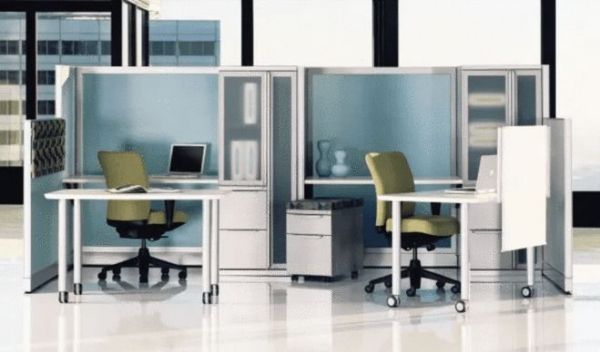
The story of Haworth began in 1948, in the hopeful post-war era, when Old Haworth turned his garage into the workshop for his first metal chair, an accidental masterpiece that ignited modern office aesthetics. The combination of curved steel tubes and canvas redefined the perception of office chairs, symbolizing a new era of work philosophy—efficiency should go hand in hand with comfort. Today, as you walk through the historic corridors of the Haworth headquarters, you can still feel this初心 in every generation of products: from the zero-gravity chair prototype designed for NASA in the 1960s, to the revolutionary modular office system in the 1980s, to the smart workstations equipped with biometric technology today, all telling the same story of humanism.
In a century-old European-style building in Jing'an District, Shanghai, Haworth conducted a time-traveling conversation with space. Designers preserved the original Art Deco lines of the building, yet redefined the interior space with a futuristic, fluid office system. The seemingly randomly placed meeting pods are actually the result of precise acoustic calculations; the adjustable office desks feature Shanghai stone gate brick patterns, evoking the collective memory of the city when touched. This respect and innovation for local culture allows Haworth to maintain its unique localization while globalizing.
In the labs of Haworth, there are many unseen gentle revolutions. Materials scientists spent three years cultivating a special mycelium, finally creating a biodegradable seat cushion; the human factors team tracked the sitting posture data of 3,000 users from different ethnic backgrounds, finding that East Asians need additional lumbar support angles; even a team specializing in coffee stains developed a nanocoating that keeps office desks spotless even after spilling lattes. These seemingly trivial researches eventually converge into Haworth's unique product philosophy—true design should precede people in discovering their needs.
In the headquarters of a technology giant in Silicon Valley, Haworth created an office ecosystem that breathes. The tiny sensors embedded in the desks can automatically adjust environmental lighting based on the user's pressure level; the transparency of the glass partitions in the conference rooms changes with the heat of the discussion; even the sofas in the rest area are equipped with heart rate monitoring functions, subtly vibrating to remind employees when they are tired. This system, once launched, increased the company's employee satisfaction by 37%, a number behind Haworth's firm belief that "technology should serve humanity."
The Museum of Decorative Arts in Paris has permanently collected Haworth's "Silk Cocoon" series workstations introduced in 2004, the curator writing on the exhibit label, "This series of works predicts the office form after the pandemic era." Indeed, as early as twenty years before remote work became a trend, Haworth proposed the "Third Space" theory, believing that the future of work will occur in the blurred zones between offices, homes, and social places. Now, their metaverse office system is in the testing phase, with wearable devices that allow users to feel the texture of real wooden tables in virtual conference rooms, a blend of virtual and reality that might be the prelude to the next office revolution.
As the evening dusk falls over Lake Michigan, the never-extinguished design light at the Haworth headquarters remains lit. In the glow, young designers are sketching the office scene of 2050. Below, in the museum, the first metal chair from 1948 is displayed. These two time spaces overlap here, outlining a brand's consistent commitment: office space is not just a container for work, but also a poetic habitat that inspires creativity and nurtures the soul. In this algorithm-driven era, Haworth still believes that the best design should be like an old friend, knowing the silent companionship.
相关知识
海沃氏:办公空间的人文叙事者
海沃氏联手科技巨头打造智慧办公新体验
海沃氏与科技公司合作,推动智能办公
海沃氏积极参与多个全球知名的办公家具行业展会
海沃氏:Zody办公椅
想象未来协作空间,X-WORK沃科亮相首届国际未来办公方式
美国海沃氏和意大利范思哲达成合作,生产和代理后者家具!
搜狐焦点家居总经理郑海云参与“沃伦门窗&媒体共创空间”论坛
林氏家居突破空间局限跨界打造艺术共享空间
Soleusair舒乐氏办公手暖桌:深受年轻人喜爱的潮流办公神器
网址: 海沃氏:打造人文办公空间的故事 http://www.jiajubaike.cn/newsview123191.html
推荐即时动态



- 1自建房造价多少钱一平米 2 24995
- 2重磅出击▏欧嘉全屋定制荣获“ 17289
- 3属鼠和属兔的合不合 属鼠的和 16417
- 4大角鹿瓷砖 8438
- 5天天315,品质365!看联 6230
- 6卢森地板2022新品触感系列 6182
- 7骊住水科技第四届进博会访谈实 5710
- 8爱情数字代表的意思大全 恋爱 5696
- 9属鸡男与属鼠女相配吗 属鸡男 5035
- 10世外康养 设计中国度假式居家 4896